veCRV and how Curve is governed
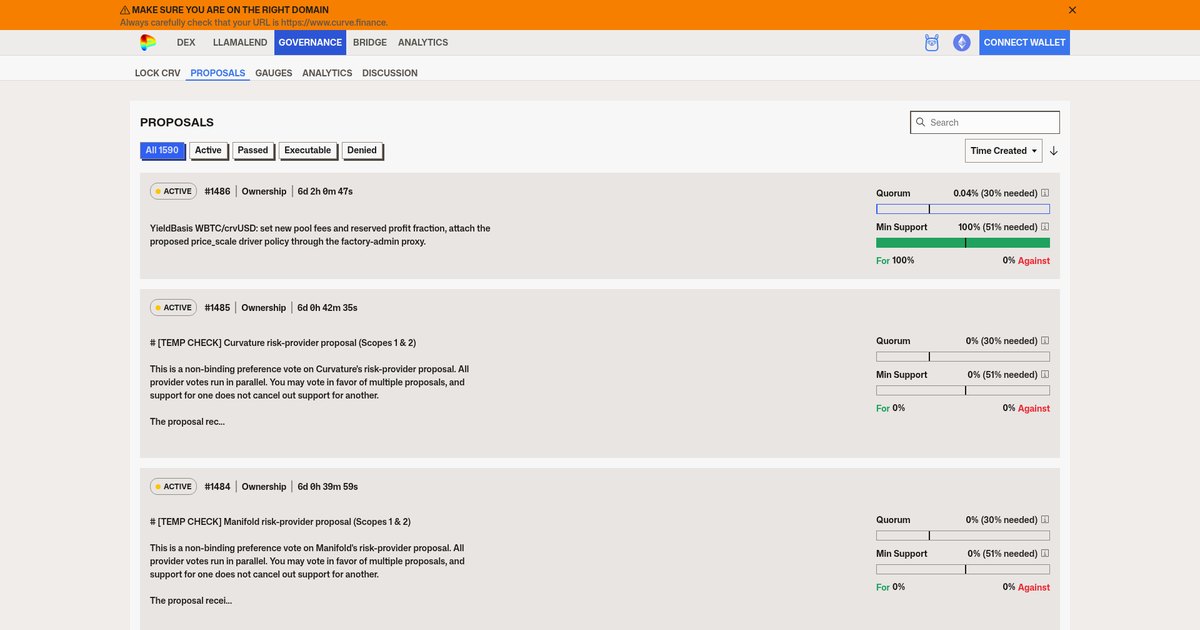
Curve is governed on-chain by veCRV holders. Understanding the weekly gauge vote explains most of what happens in the ecosystem — including where your farming rewards will be next month.
How voting power is created
Lock CRV, receive veCRV. Weight is proportional to amount multiplied by remaining lock length, so one token locked for four years carries roughly four times the weight of the same token locked for one. Weight decays every block as expiry approaches.
That decay is deliberate: influence must be continuously renewed, so governance power tracks ongoing commitment rather than a one-off purchase.
What the DAO decides
Parameter changes, new gauge approvals, fee settings and treasury actions run through on-chain proposals with quorum and support thresholds. Separately, gauge weights are voted every week and determine emission distribution.
The weekly vote is where the real money moves. A pool that wins weight sees its APR rise and attracts liquidity; a pool that loses weight can see deposits leave within days.
The vote incentive market
Because votes are valuable, a market emerged to buy them. Protocols post incentives on platforms such as Votium; veCRV holders (or aggregators voting on their behalf) direct weight and collect the payment.
Supporters call it efficient price discovery for liquidity. Critics call it governance capture, since emissions follow whoever pays most rather than whoever serves users best. Both descriptions have merit, and any LP should assume incentives can be withdrawn abruptly.
Participating sensibly
Read proposals before delegating. Check the actual on-chain calldata rather than the summary, verify that the deployer address matches the DAO's known contracts, and be aware that vote-escrow lockups are irreversible.
Frequently asked questions
Can a single entity control Curve governance?
Large aggregators hold a very substantial share of veCRV, so concentration is a genuine concern; no single address has unilateral control, but coordinated blocs are influential.
Latest updates
Deeper coverage of CRV tokenomics and the Curve wars
Emissions, gauge weights, bribe markets and the role of Convex are described in more detail, together with what locking CRV for four years actually returns to a liquidity provider.
Popular searches answered on this page
What is veCRV and how does Curve DAO governance work?
Locking CRV for up to four years mints non-transferable veCRV, which grants voting power, up to a 2.5x boost on farming rewards and a share of protocol fees. veCRV holders vote weekly on gauge weights that decide where CRV emissions go.
veCRV and governance →What are the Curve wars?
The Curve wars are the ongoing competition between protocols to accumulate veCRV voting power and steer CRV emissions to their own pools. Vote markets and bribe platforms let projects rent that influence per epoch.
Curve wars explained →Related reading
Articles
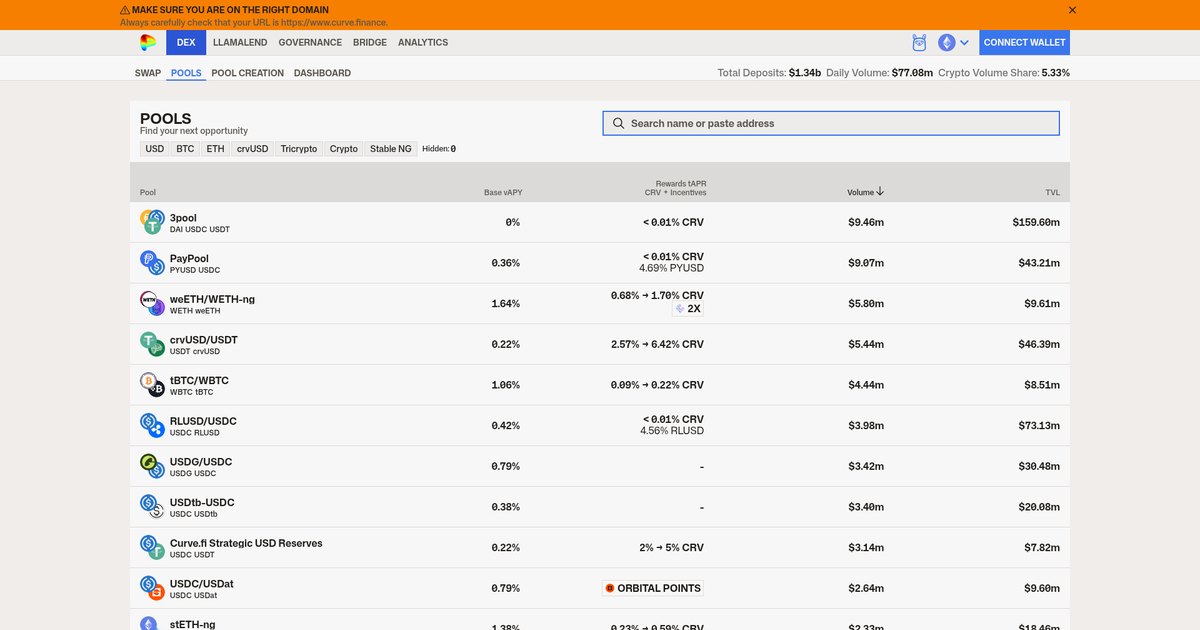
How the Curve AMM actually works
A step-by-step explanation of the Curve stableswap invariant, the amplification parameter A, price impact and how cryptoswap extends it to volatile assets.
Read more →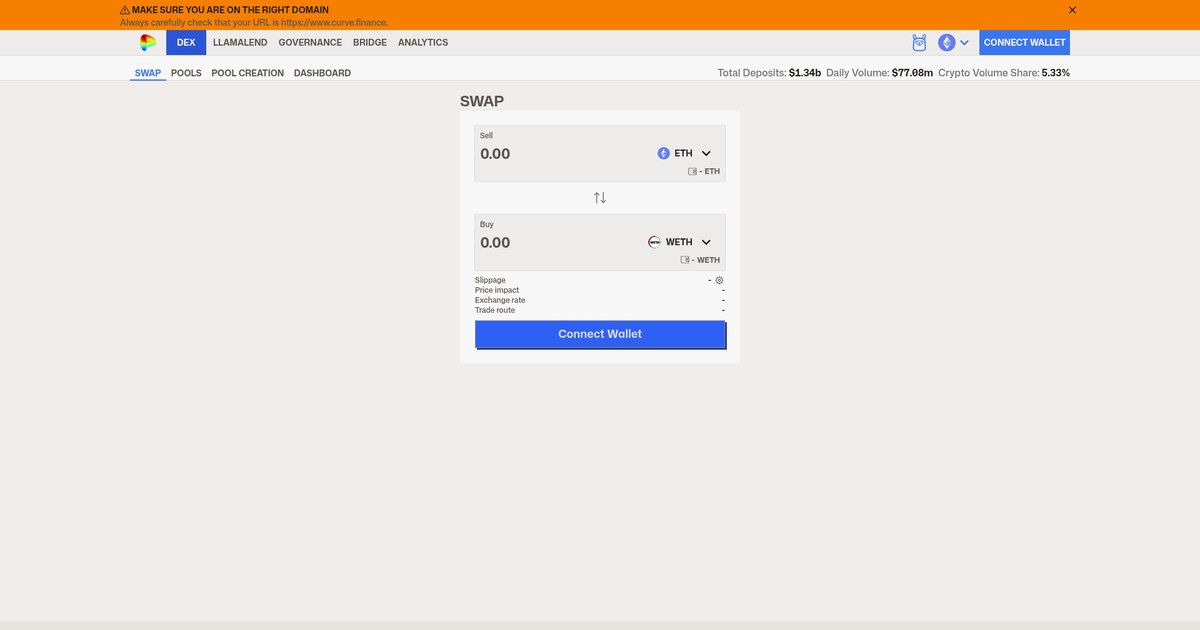
Articles
How to evaluate a stablecoin liquidity pool
A practical checklist for judging a Curve stablecoin pool: asset quality, pool balance, amplification, volume-to-TVL ratio and reward sustainability.
Read more →
Articles
Yield farming on Curve, step by step
How CRV rewards are earned and claimed: gauge staking, boost calculation, aggregators like Convex, compounding, gas costs and calculating a realistic net yield.
Read more →
Articles
Curve security and the risks that matter
An honest overview of Curve risks: smart contract and compiler bugs, depegs, oracle manipulation, governance capture, phishing, and practical mitigations.
Read more →Guides
What is Curve Finance?
A clear introduction to Curve Finance: the stableswap AMM, who uses it, what problem it solves and how it differs from Uniswap.
Read more →Guides
Curve pools and swaps
How Curve liquidity pools work: pool types, swap fees, slippage, LP tokens, depositing and withdrawing, and how to read pool balance.
Read more →