How to evaluate a stablecoin liquidity pool
Two pools can advertise the same APR and carry completely different risk. These are the checks worth doing before any deposit.
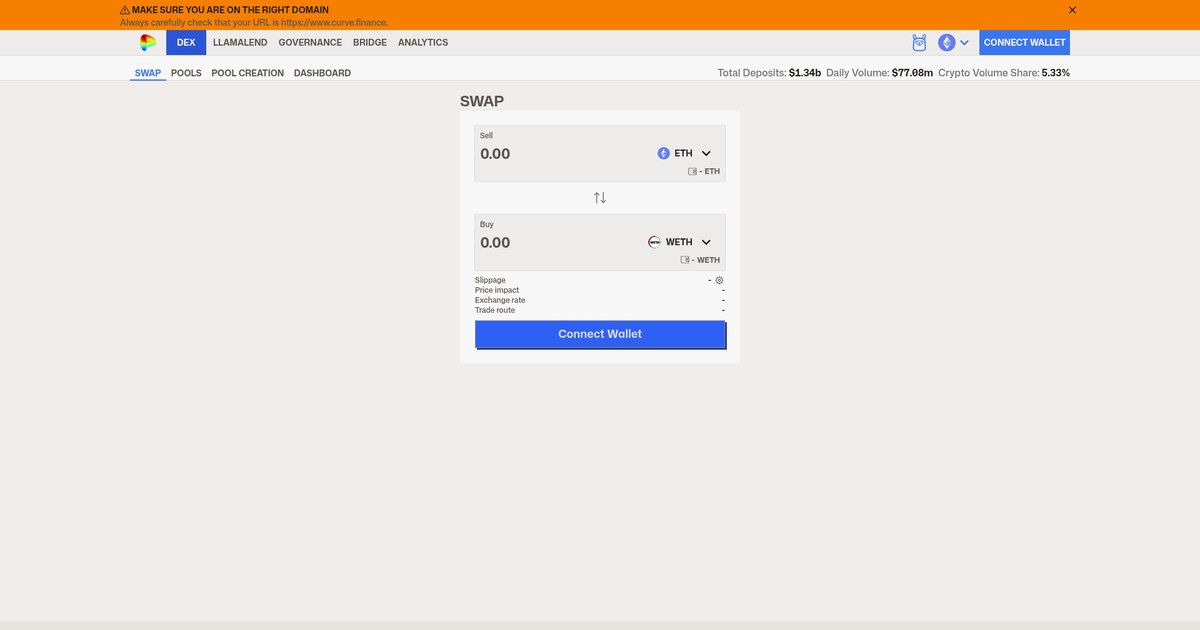
Start with the assets, not the APR
A pool is only as strong as its weakest asset. Ask what backs each stablecoin, who can freeze or mint it, whether reserves are attested, and whether it has ever depegged. An algorithmic or thinly-backed coin in the pool means you are effectively underwriting it.
The yield is the market's payment for that risk. Unusually high yield on a stable pair is a warning, not an opportunity.
Check the balance
A healthy stable pool sits near even weights. A pool that is 80% one asset is telling you the market is selling that asset into the pool. Depositing the abundant side at that moment locks in an unfavourable ratio.
Look at how long the imbalance has persisted. Brief skew after a large trade is normal; a week of one-sided drift is a signal.
Volume relative to TVL
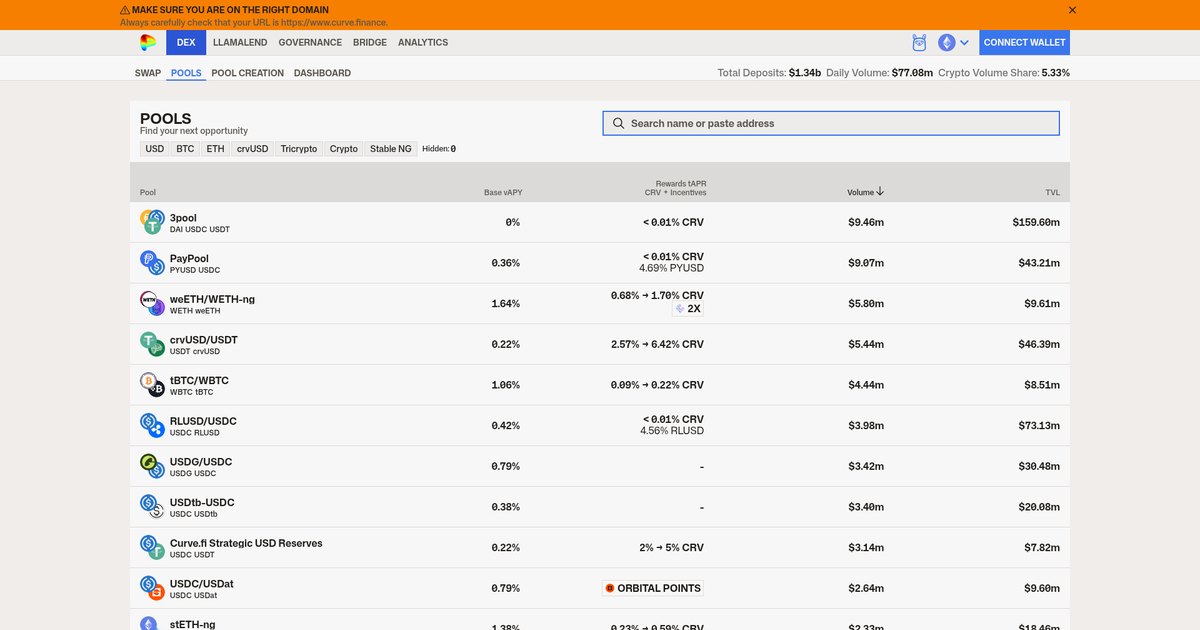
Fee income scales with volume, not with deposits. A pool with high TVL and low volume pays almost nothing in fees, meaning your entire return depends on emissions that can be voted away next week.
Divide daily volume by TVL. Sustained ratios well below a few percent mean the fee component is negligible.
Ask where the rewards come from
Separate the APR into fees, CRV emissions and external incentives. Fees are organic. Emissions depend on gauge votes. External incentives usually run for a fixed campaign period. Only the first survives without anyone's continued goodwill.
Frequently asked questions
How much should I allocate to a single pool?
Treat each pool as an unsecured exposure to every asset it contains and size it accordingly, splitting across pools and chains rather than chasing the single highest number.
Latest updates
Site launched in English, Spanish, Chinese and Russian
Five core guides and five deep-dive articles went live in four languages, with cross-language links, canonical tags and a multilingual sitemap so each version is indexed separately.
Popular searches answered on this page
How do Curve liquidity pools and LP tokens work?
Depositing into a curve liquidity pool mints an LP token representing your share of the reserves plus accrued trading fees. Staking that LP token in the pool's gauge adds CRV emissions on top.
Stablecoin liquidity pools →Can I deposit only one stablecoin into a Curve pool?
Yes — single-sided deposits are allowed, and the pool applies a small bonus or penalty depending on whether your deposit balances or unbalances the reserves. Withdrawals work the same way in reverse.
Pool deposit mechanics →Related reading
Articles
How the Curve AMM actually works
A step-by-step explanation of the Curve stableswap invariant, the amplification parameter A, price impact and how cryptoswap extends it to volatile assets.
Read more →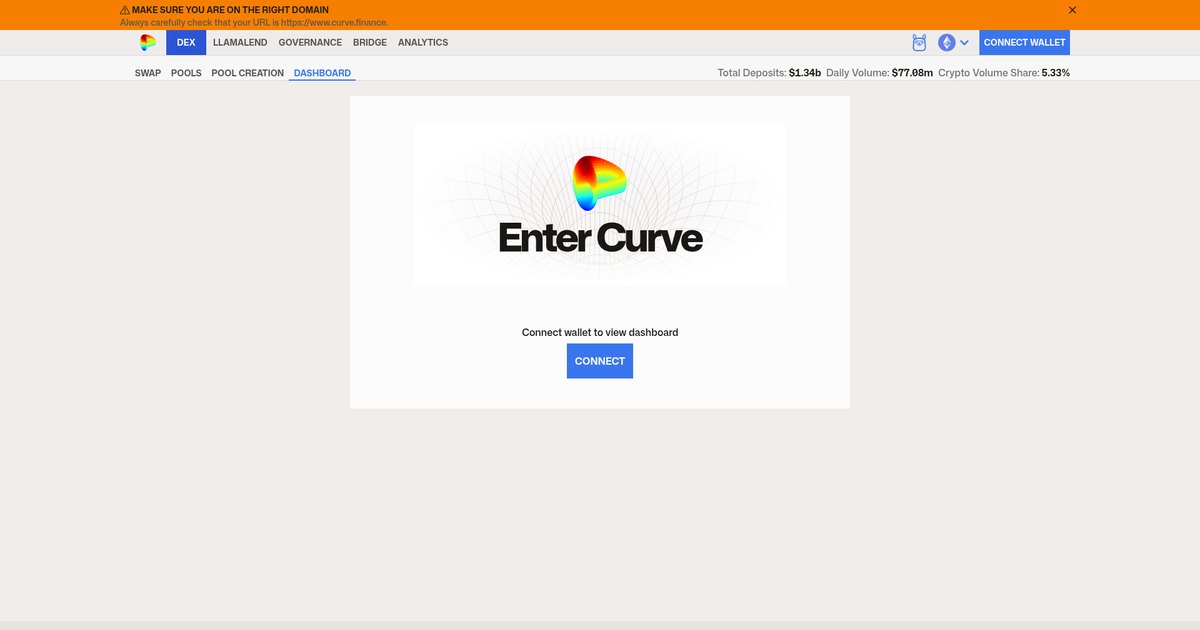
Articles
Yield farming on Curve, step by step
How CRV rewards are earned and claimed: gauge staking, boost calculation, aggregators like Convex, compounding, gas costs and calculating a realistic net yield.
Read more →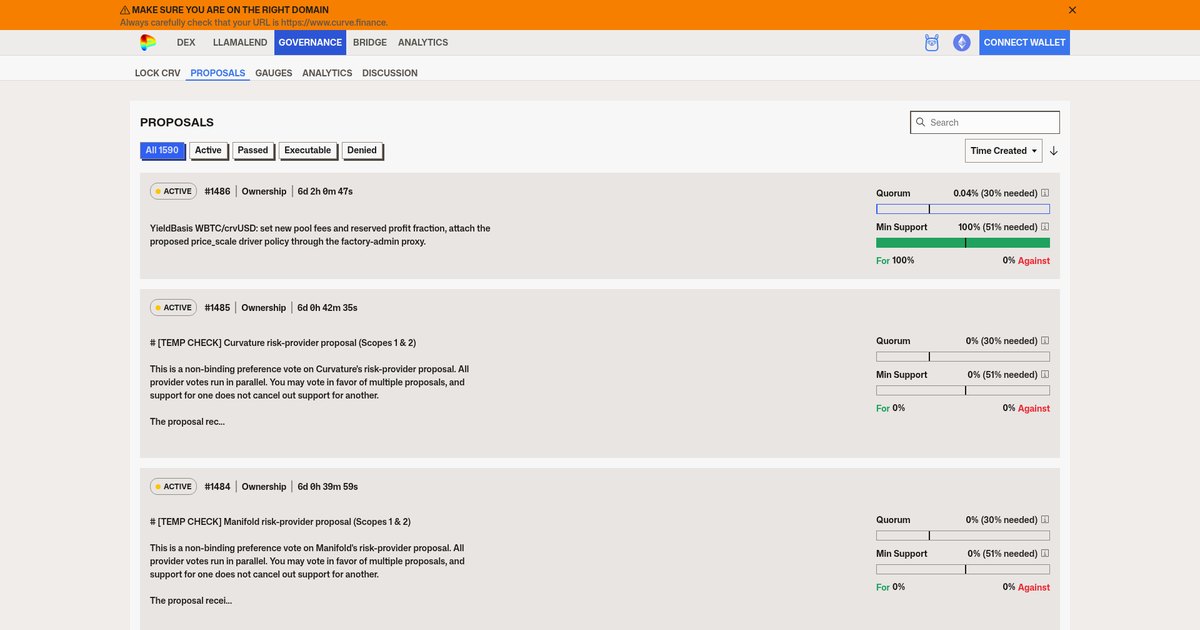
Articles
veCRV and how Curve is governed
How the Curve DAO works: veCRV voting weight, proposal thresholds, weekly gauge weight votes, the vote incentive market and its criticisms.
Read more →
Articles
Curve security and the risks that matter
An honest overview of Curve risks: smart contract and compiler bugs, depegs, oracle manipulation, governance capture, phishing, and practical mitigations.
Read more →Guides
What is Curve Finance?
A clear introduction to Curve Finance: the stableswap AMM, who uses it, what problem it solves and how it differs from Uniswap.
Read more →Guides
Curve pools and swaps
How Curve liquidity pools work: pool types, swap fees, slippage, LP tokens, depositing and withdrawing, and how to read pool balance.
Read more →