crvUSD and borrowing on Curve
crvUSD is Curve's own dollar-pegged stablecoin. You mint it by locking collateral such as ETH or wBTC. Its distinctive feature is LLAMMA, a lending-liquidation AMM that liquidates positions gradually instead of all at once.
How minting works
You open a position by depositing collateral and choosing a number of price bands. crvUSD is minted against that collateral and must remain overcollateralised. Repaying the debt plus accrued interest releases the collateral.
The borrow rate is not fixed. It responds to the crvUSD market price: when crvUSD trades below a dollar the rate rises, discouraging new debt and encouraging repayment, which pushes the peg back up.
LLAMMA and soft liquidation
In a conventional lending market, crossing the liquidation threshold triggers an immediate, total liquidation with a penalty. LLAMMA instead spreads your collateral across price bands and converts it into crvUSD band by band as the price falls, then converts it back as the price recovers.
The result is a much smoother experience: instead of one catastrophic event, you experience a gradual, partly reversible conversion. The trade-off is a real cost during choppy markets, since repeated up-and-down movement through your bands sells low and buys high.
Keeping the peg
Peg keeper contracts hold crvUSD in dedicated pools and can mint or burn asymmetric amounts to absorb imbalances. Combined with the dynamic borrow rate, they form a two-sided defence of the peg.
Curve lending markets extend the same machinery to isolated lend/borrow pairs, letting lenders earn on crvUSD while borrowers use volatile collateral with the same soft-liquidation logic.
Frequently asked questions
Can I still be fully liquidated?
Yes. If the price falls far below your bands and stays there, the position enters hard liquidation. Soft liquidation buys time and reduces shock; it does not remove the risk.
What backs crvUSD?
Overcollateralised crypto positions plus the peg keeper reserves. It is not backed by off-chain fiat deposits.
Latest updates
crvUSD and lending guide expanded
The crvUSD section now explains the LLAMMA band mechanism, soft liquidation, the borrow rate policy and how peg keepers defend the price, with worked examples of a loan going underwater.
Popular searches answered on this page
What is crvUSD and how does Curve lending work?
crvUSD is Curve's over-collateralised stablecoin minted against collateral like ETH or LSTs. Curve lending uses LLAMMA, which liquidates gradually across price bands instead of in one hard liquidation event.
crvUSD and lending →Related reading
Guides
What is Curve Finance?
A clear introduction to Curve Finance: the stableswap AMM, who uses it, what problem it solves and how it differs from Uniswap.
Read more →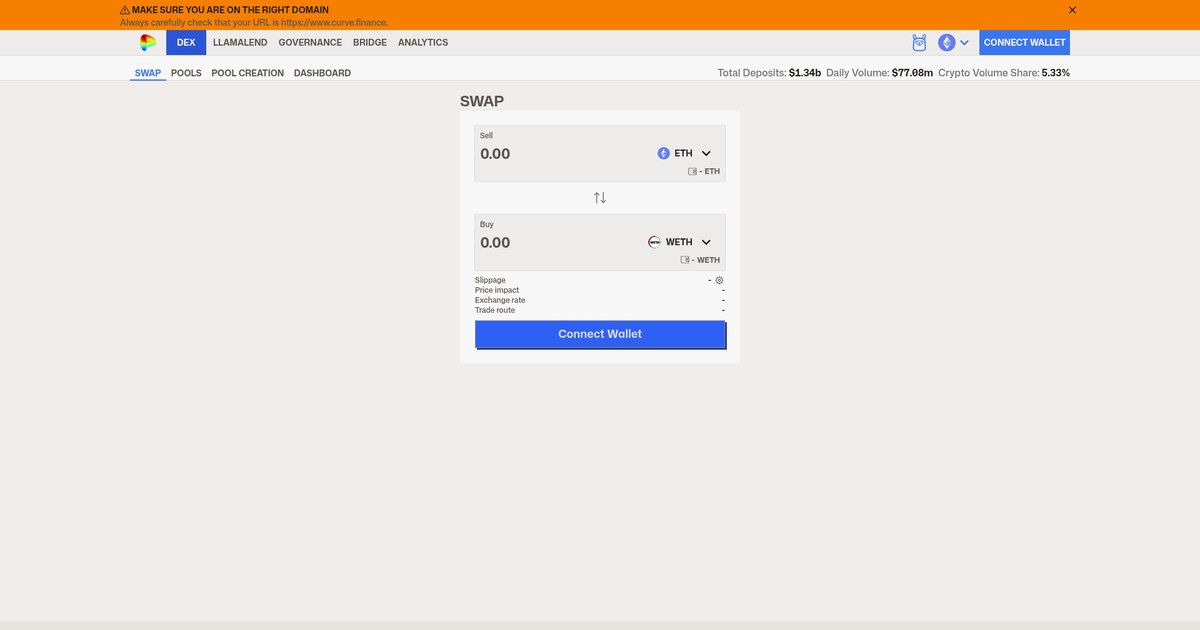
Guides
Curve pools and swaps
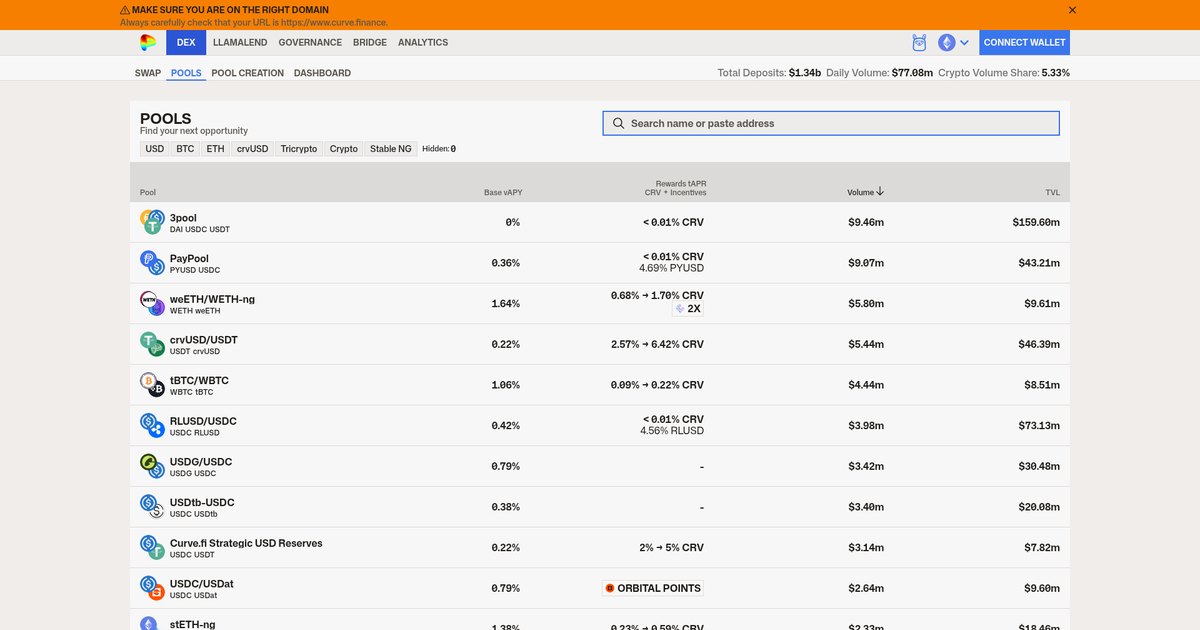
How Curve liquidity pools work: pool types, swap fees, slippage, LP tokens, depositing and withdrawing, and how to read pool balance.
Read more →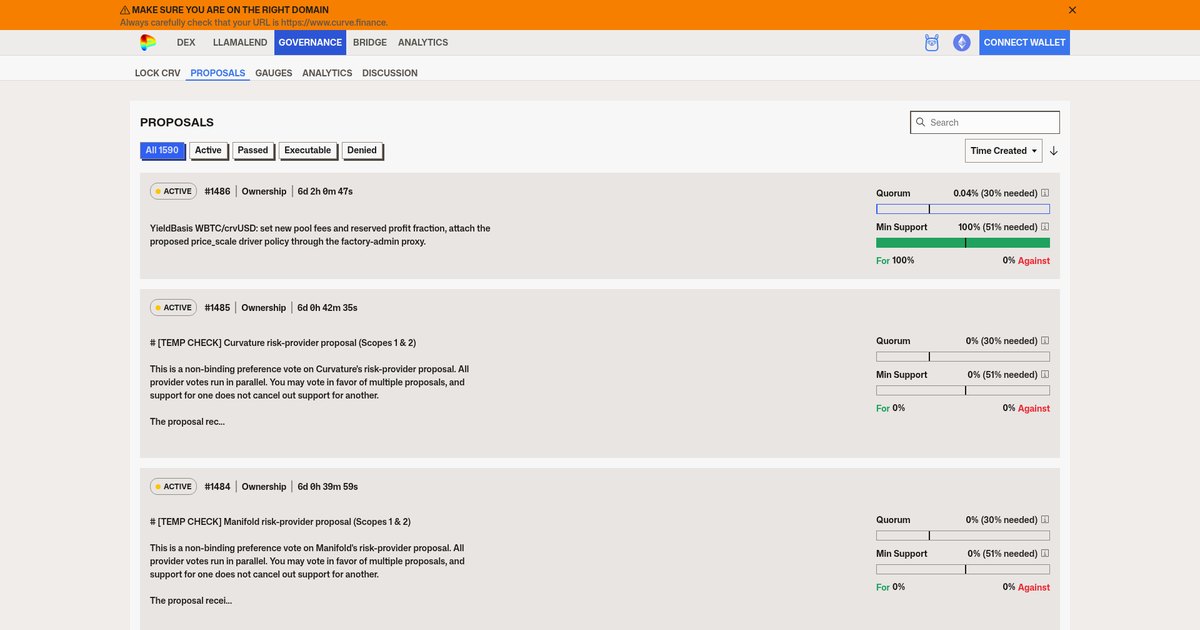
Guides
CRV tokenomics and veCRV
CRV supply and emissions, how vote-escrowed veCRV works, boost calculation, gauge weight voting and the vote incentive market.
Read more →
Guides
How to use Curve Finance step by step
Step-by-step guide on how to use Curve Finance: connect a wallet, swap stablecoins, add liquidity, stake LP tokens in a gauge, claim CRV and lock veCRV safely.
Read more →Articles
How the Curve AMM actually works
A step-by-step explanation of the Curve stableswap invariant, the amplification parameter A, price impact and how cryptoswap extends it to volatile assets.
Read more →Articles
How to evaluate a stablecoin liquidity pool
A practical checklist for judging a Curve stablecoin pool: asset quality, pool balance, amplification, volume-to-TVL ratio and reward sustainability.
Read more →