What is Curve Finance?
Curve Finance is a decentralised exchange protocol optimised for swapping assets of similar value with minimal slippage. It runs as a set of immutable smart contracts, is governed by veCRV holders and has been one of the largest venues for stablecoin liquidity in DeFi since 2020.
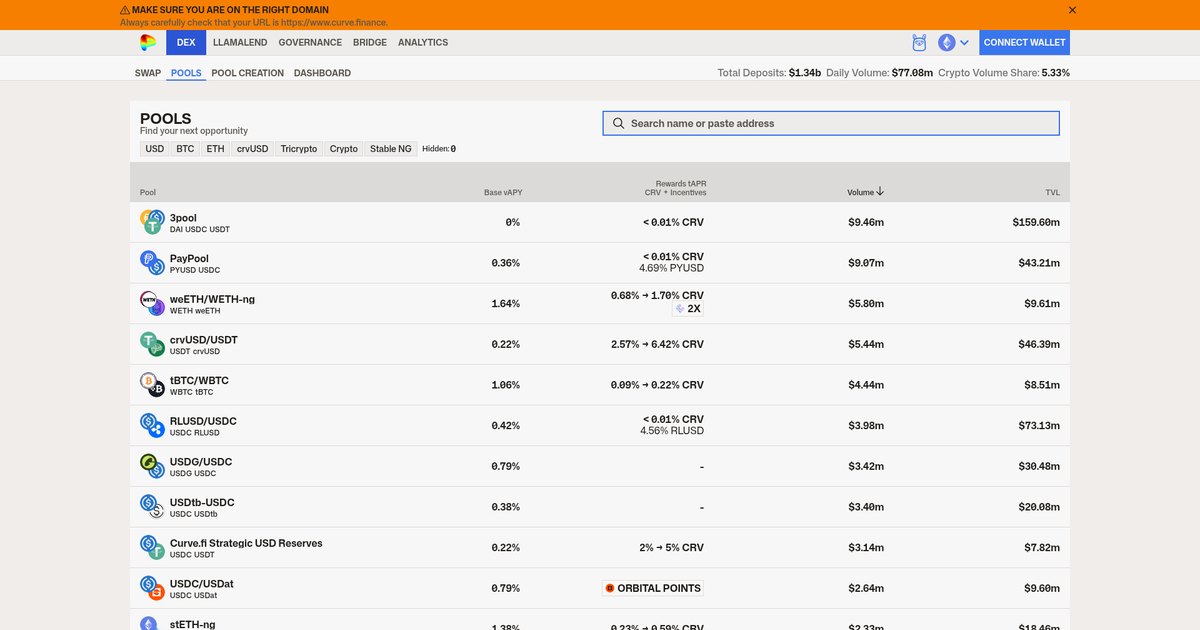
The problem Curve solves
A classic constant-product AMM (x·y=k) prices every trade along a hyperbola. That works for unrelated assets, but it wastes capital when both sides of the pool should be worth the same. Swapping ten million USDC for USDT on such a curve moves the price noticeably even though nothing about the fair rate has changed.
Curve's stableswap invariant blends a constant-sum curve (flat, zero slippage) near the peg with a constant-product curve at the extremes. Near balance the pool behaves almost like an order book with infinite depth; far from balance it protects itself from being drained.
Who uses Curve and why
Traders and aggregators route stablecoin and LST swaps through Curve because execution on size is usually better than elsewhere. Protocols use it as exit liquidity for their own tokens. Treasuries and DAOs park stablecoins in pools to earn trading fees plus CRV emissions.
A whole ecosystem grew on top: Convex, Yearn and others aggregate veCRV voting power so that smaller providers can access boosted yields without locking CRV themselves.
How Curve differs from Uniswap
Uniswap v3 achieves capital efficiency through user-managed concentrated liquidity ranges. Curve achieves it through a formula tuned by an amplification parameter (A), so liquidity providers can deposit passively without managing ranges.
Curve also ships a second invariant, cryptoswap, for volatile pairs such as tricrypto. It automatically re-concentrates liquidity around an internal moving price oracle, which is closer to an actively managed range strategy — but automated at the contract level.
Frequently asked questions
Who created Curve Finance?
Curve was founded by Michael Egorov, who published the original stableswap whitepaper in 2019; the protocol launched in January 2020 and is now governed by the Curve DAO.
Is Curve only for stablecoins?
No. Stableswap pools handle pegged assets, while cryptoswap pools handle volatile pairs like CRV/ETH or tricrypto (USDT/WBTC/ETH).
Latest updates
FAQ blocks built around real search queries
Fourteen questions per language now answer the things people actually search for: how StableSwap works, what vote-escrow gives you, how LLAMMA soft-liquidation behaves, and whether Curve is safe to use.
Site launched in English, Spanish, Chinese and Russian
Five core guides and five deep-dive articles went live in four languages, with cross-language links, canonical tags and a multilingual sitemap so each version is indexed separately.
Popular searches answered on this page
What is Curve Finance and how does it work?
Curve Finance is a decentralised exchange (Curve DEX) built for assets that should trade near a fixed ratio, such as stablecoins and liquid staking tokens. It uses the StableSwap invariant to concentrate liquidity around the peg, so a curve swap costs far less slippage than on a constant-product AMM.
What is Curve Finance →Related reading
Guides
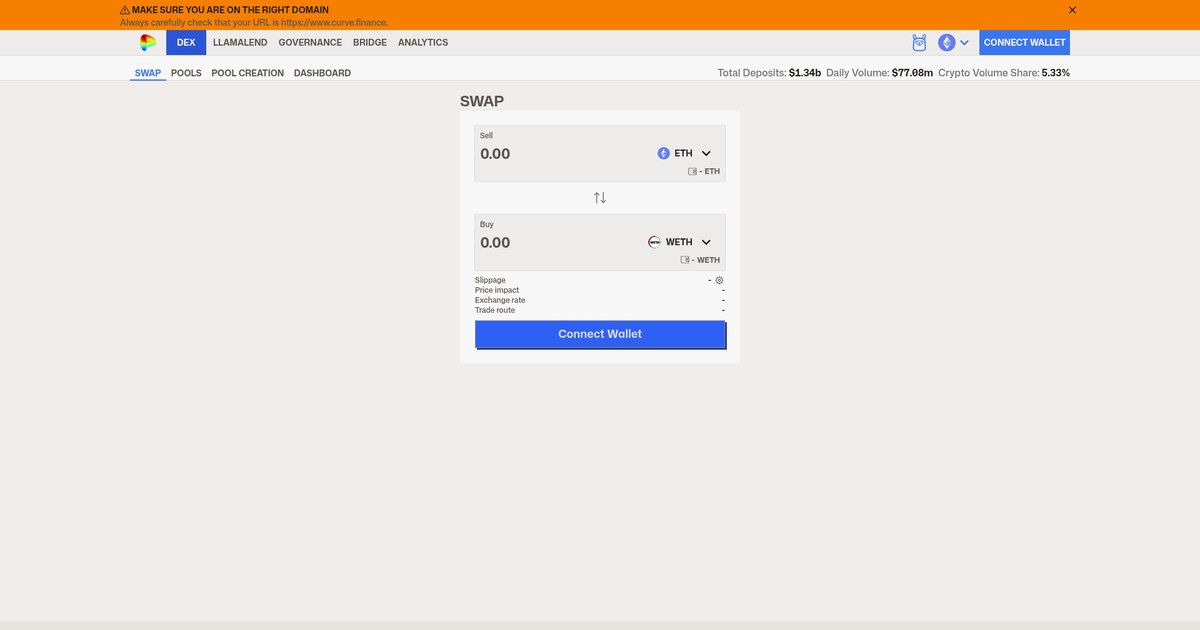
Curve pools and swaps
How Curve liquidity pools work: pool types, swap fees, slippage, LP tokens, depositing and withdrawing, and how to read pool balance.
Read more →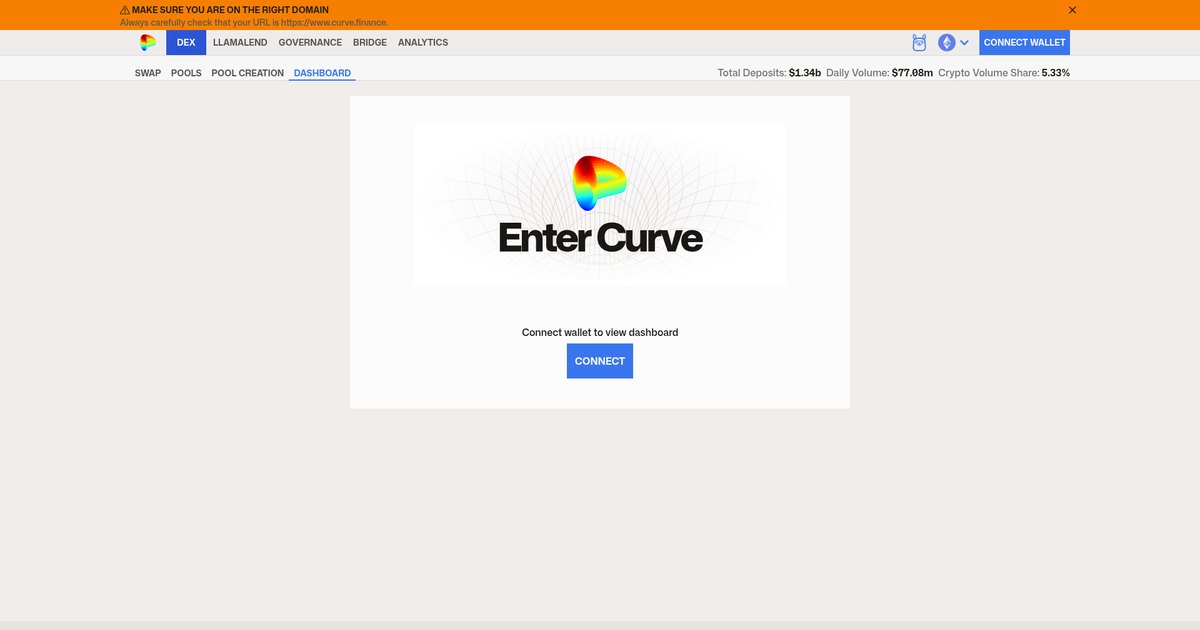
Guides
crvUSD and borrowing on Curve
How crvUSD works: overcollateralised minting, the LLAMMA soft-liquidation engine, borrow rates, the peg keeper and Curve lending markets.
Read more →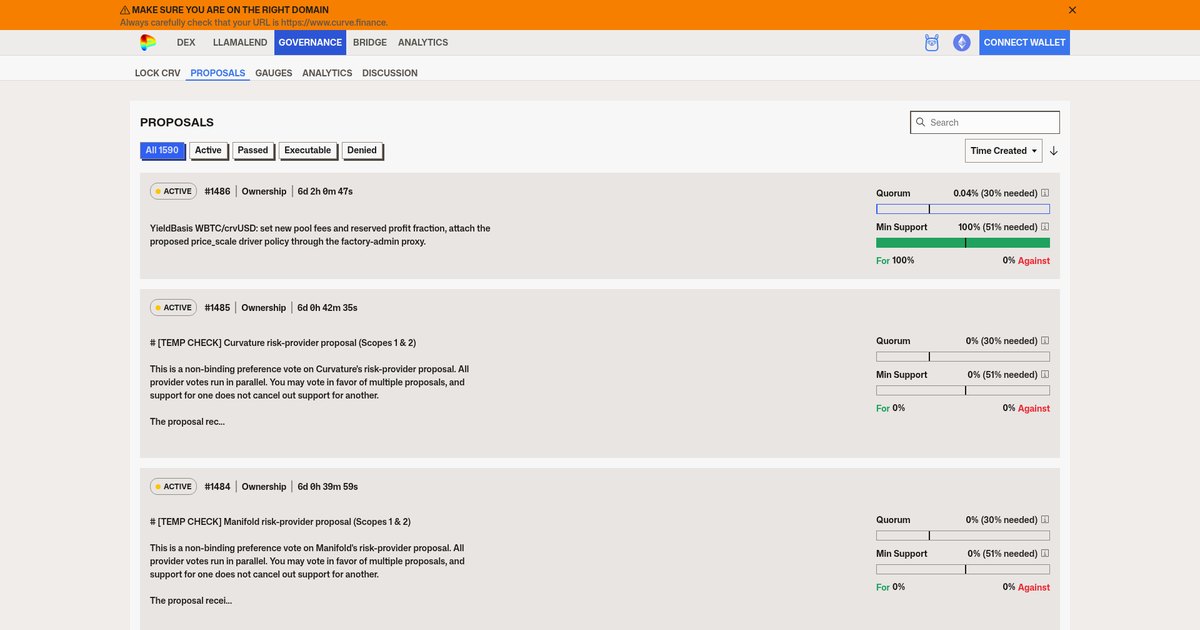
Guides
CRV tokenomics and veCRV
CRV supply and emissions, how vote-escrowed veCRV works, boost calculation, gauge weight voting and the vote incentive market.
Read more →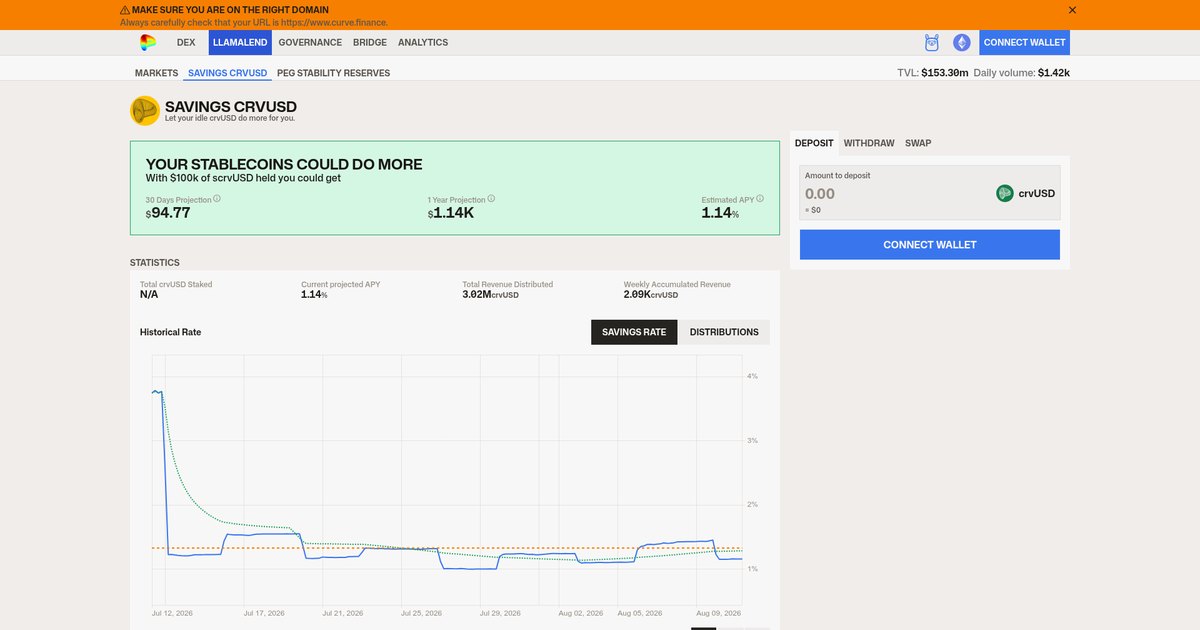
Guides
How to use Curve Finance step by step
Step-by-step guide on how to use Curve Finance: connect a wallet, swap stablecoins, add liquidity, stake LP tokens in a gauge, claim CRV and lock veCRV safely.
Read more →Articles
How the Curve AMM actually works
A step-by-step explanation of the Curve stableswap invariant, the amplification parameter A, price impact and how cryptoswap extends it to volatile assets.
Read more →Articles
How to evaluate a stablecoin liquidity pool
A practical checklist for judging a Curve stablecoin pool: asset quality, pool balance, amplification, volume-to-TVL ratio and reward sustainability.
Read more →