CRV tokenomics and veCRV
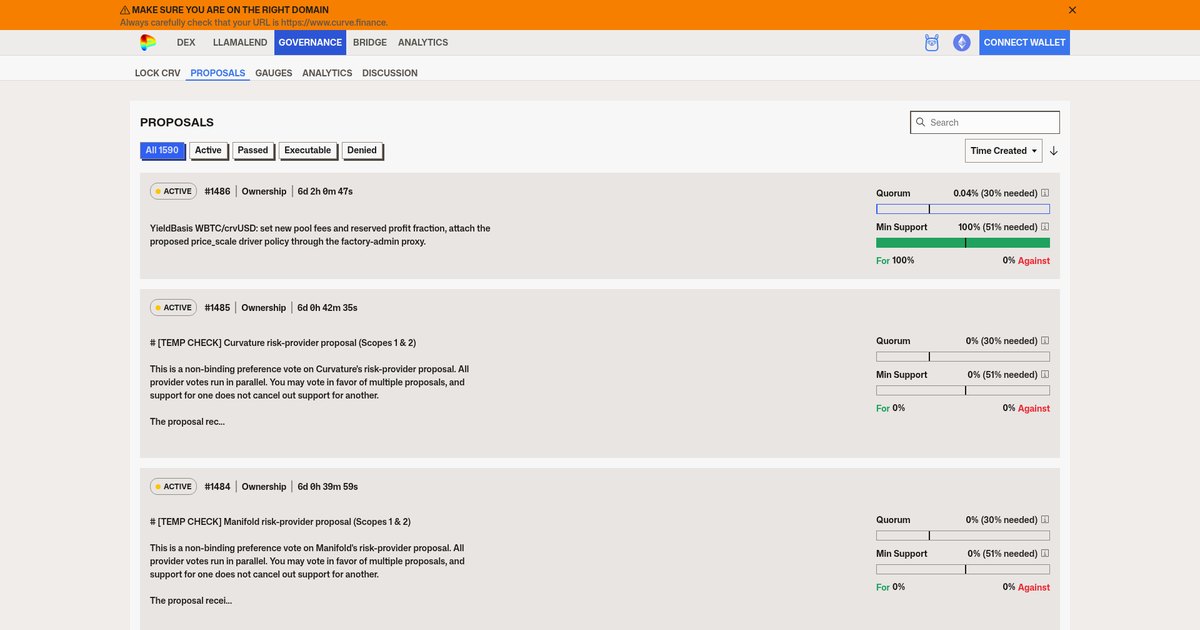
CRV is the governance and incentive token of the Curve ecosystem. Its value model rests on one mechanism: locking. Lock CRV and you receive veCRV, which grants voting power, fee revenue and a reward boost of up to 2.5×.
Supply and emissions
CRV has a capped maximum supply released on a decreasing schedule; annual emissions step down roughly 16% each year. Those emissions are the budget that pays liquidity providers, and their distribution is decided by vote rather than by the team.
Because emissions shrink over time, a pool's advertised APR from CRV falls unless it wins a larger share of the vote or attracts external incentives.
Locking, boost and fees
Locking CRV for between one week and four years mints veCRV. veCRV is non-transferable and decays linearly toward zero as the unlock date approaches, so long-term alignment is rewarded and mercenary capital is not.
Holders receive a share of protocol fees, can vote on proposals and gauge weights, and get a boost on their own LP rewards. The boost depends on your veCRV balance relative to your share of the pool, so it favours holders who concentrate their liquidity.
Gauge weights and the Curve Wars
Every week veCRV holders vote on gauge weights, which decide how CRV emissions are split across pools. For a protocol that needs deep liquidity for its own stablecoin, buying that vote is cheaper than paying for liquidity directly.
This created the Curve Wars: Convex, Stake DAO and vote marketplaces such as Votium accumulate veCRV power and sell it to the highest bidder. The vote incentive market is now a permanent feature of the ecosystem and a major part of the real yield an LP receives.
Frequently asked questions
Can I unlock veCRV early?
No. The lock is enforced by contract until it expires; the only liquid alternatives are wrapped derivatives issued by third parties, which carry their own risks and price discount.
Is a maximum boost worth a four-year lock?
It depends on position size and horizon. For smaller providers, depositing through an aggregator that already holds veCRV is often more efficient than locking directly.
Latest updates
Real Curve Finance interface screenshots on every page
Illustrations were replaced with screenshots of the live Curve app — the pools list, the swap screen, the gauge dashboard, DAO proposals, veCRV locking and crvUSD savings — and each one now carries descriptive alt text and social preview images.
New step-by-step guide: how to use Curve Finance
A full walkthrough was added: connecting a wallet, swapping stablecoins, adding liquidity, staking LP tokens in a gauge, claiming CRV and locking veCRV, plus the mistakes that cost beginners the most.
Deeper coverage of CRV tokenomics and the Curve wars
Emissions, gauge weights, bribe markets and the role of Convex are described in more detail, together with what locking CRV for four years actually returns to a liquidity provider.
Popular searches answered on this page
What is the CRV token used for and what drives CRV price?
CRV is the Curve DAO token: it rewards liquidity providers through gauges and can be locked as veCRV for governance power and fee share. CRV price mainly reflects emissions, lock ratio and the demand for gauge votes in the Curve wars.
CRV tokenomics →Related reading
Guides
What is Curve Finance?
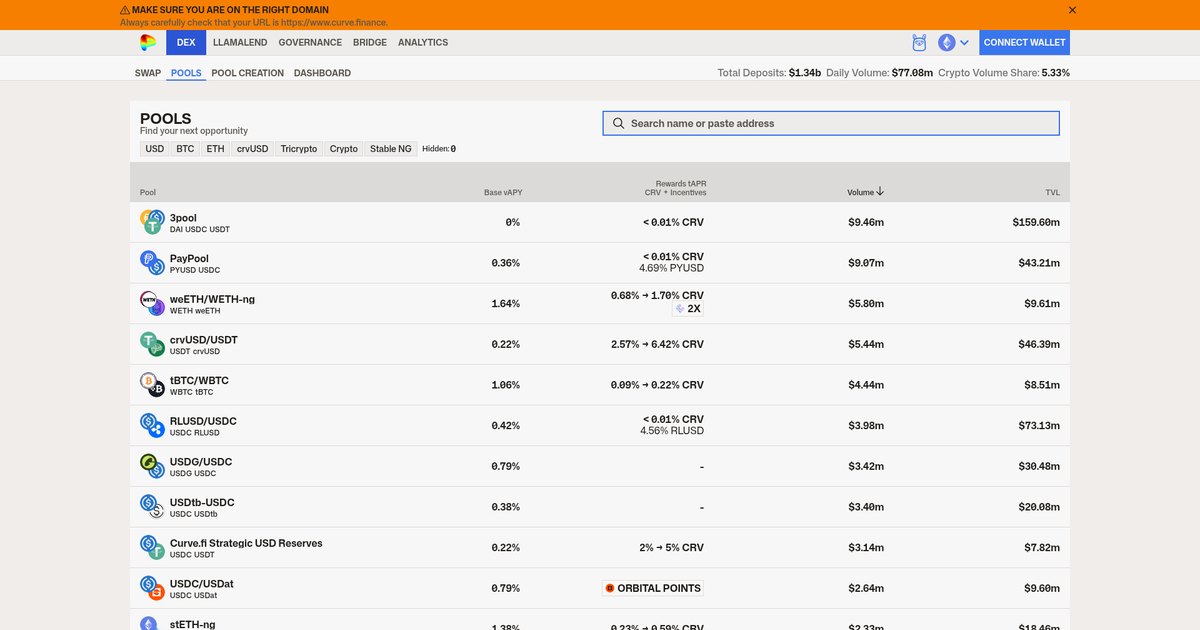
A clear introduction to Curve Finance: the stableswap AMM, who uses it, what problem it solves and how it differs from Uniswap.
Read more →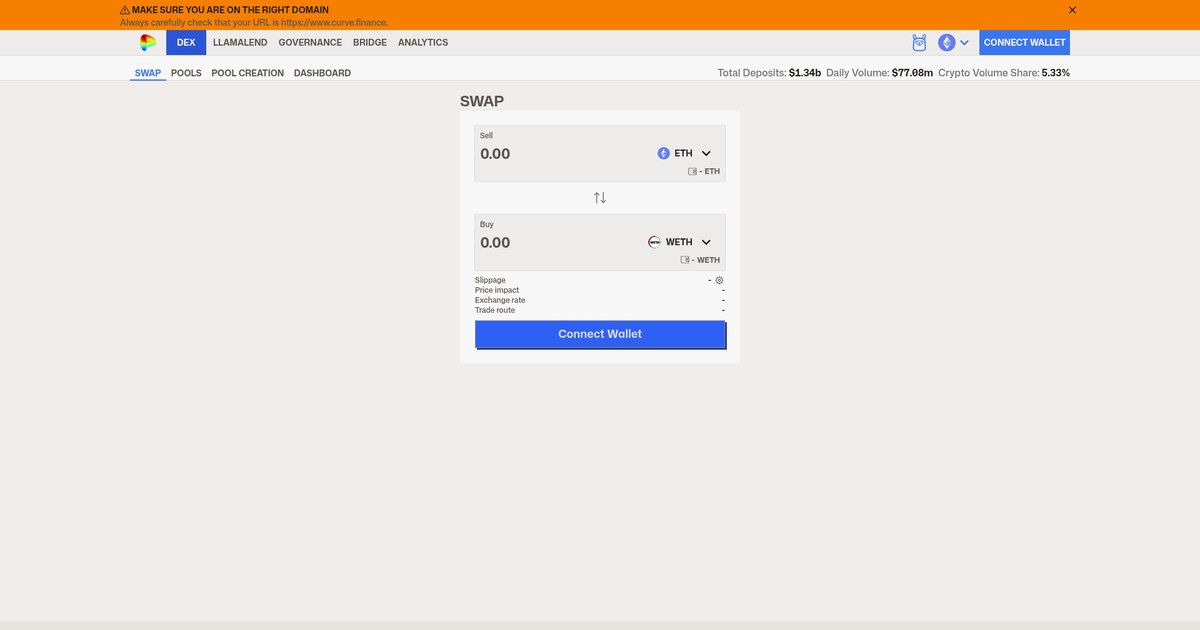
Guides
Curve pools and swaps
How Curve liquidity pools work: pool types, swap fees, slippage, LP tokens, depositing and withdrawing, and how to read pool balance.
Read more →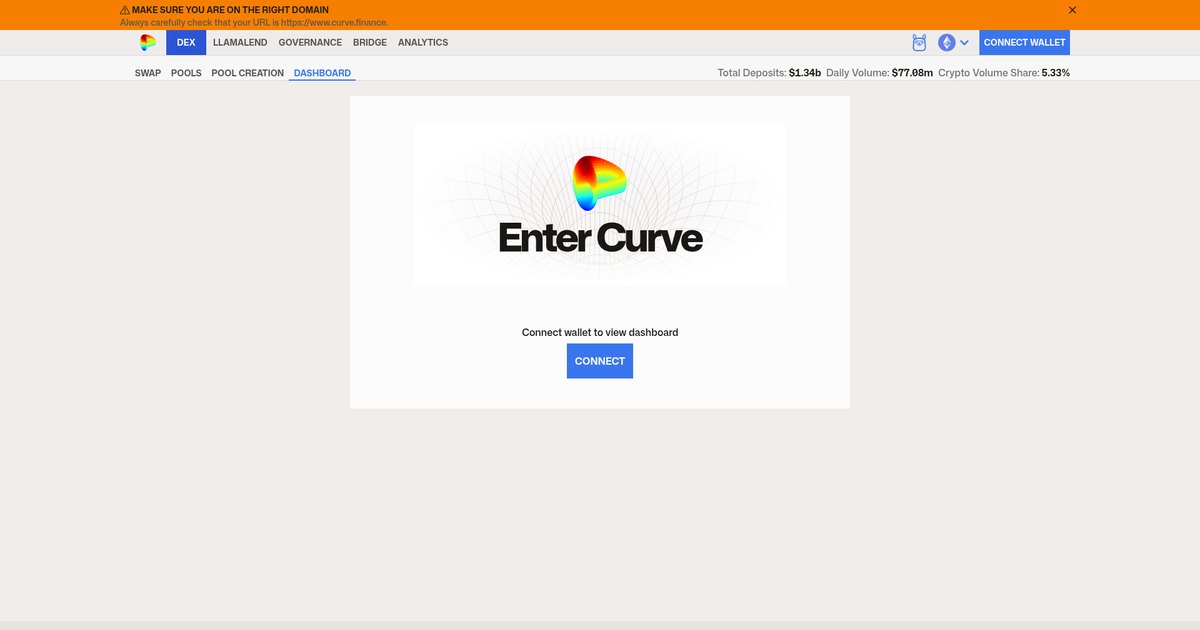
Guides
crvUSD and borrowing on Curve
How crvUSD works: overcollateralised minting, the LLAMMA soft-liquidation engine, borrow rates, the peg keeper and Curve lending markets.
Read more →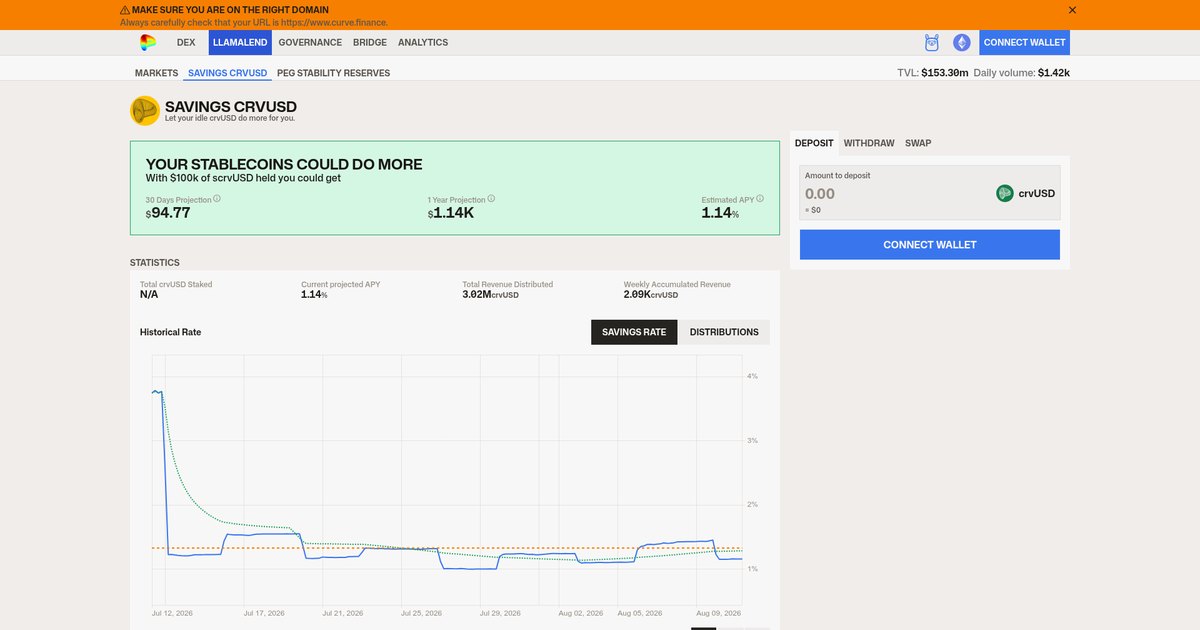
Guides
How to use Curve Finance step by step
Step-by-step guide on how to use Curve Finance: connect a wallet, swap stablecoins, add liquidity, stake LP tokens in a gauge, claim CRV and lock veCRV safely.
Read more →Articles
How the Curve AMM actually works
A step-by-step explanation of the Curve stableswap invariant, the amplification parameter A, price impact and how cryptoswap extends it to volatile assets.
Read more →Articles
How to evaluate a stablecoin liquidity pool
A practical checklist for judging a Curve stablecoin pool: asset quality, pool balance, amplification, volume-to-TVL ratio and reward sustainability.
Read more →