Curve pools and swaps
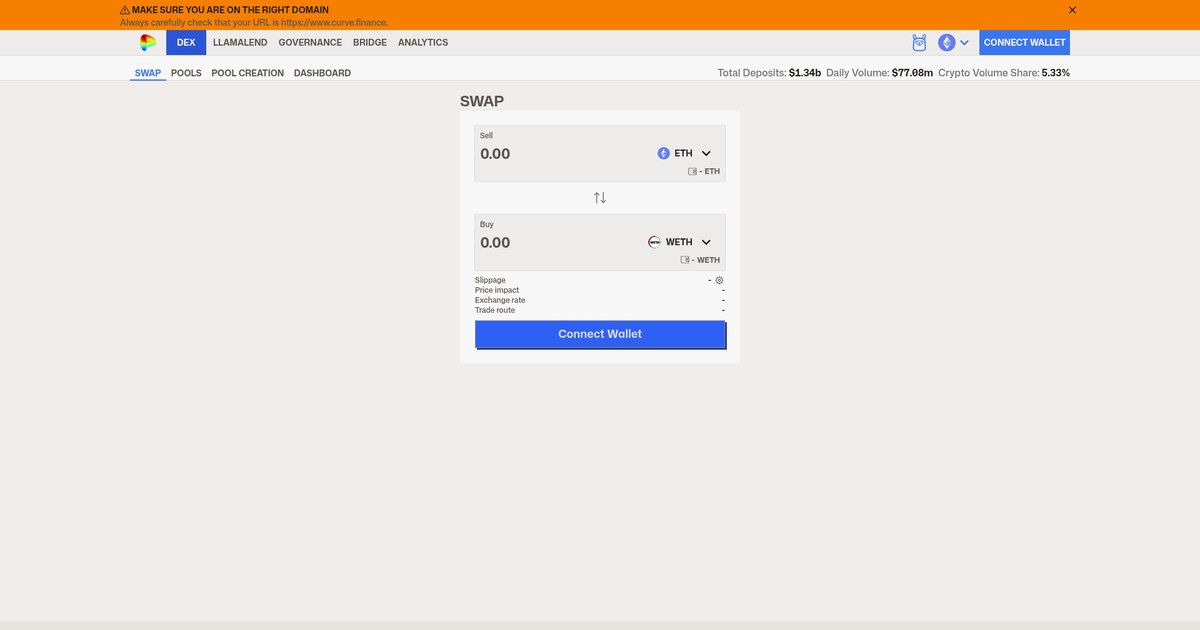
Every trade on Curve happens against a pool — a smart contract holding two or more assets. Understanding pool composition, the amplification parameter and the fee split is the difference between a good deposit and a bad one.
Pool types
Plain pools hold the raw assets, for example USDC and USDT. Metapools pair a single asset against an existing LP token, which lets a new stablecoin bootstrap deep liquidity without a separate pool for every counterpart. Lending pools deposit the idle side into a money market for extra yield. Cryptoswap pools hold volatile assets.
Newer factory pools let anyone deploy a pool permissionlessly. That flexibility is useful, but it also means the asset in a high-yield pool may be far riskier than the yield alone suggests.
Fees and what you earn
Swap fees on stable pools are typically a few basis points, much lower than a general AMM, because the pool expects high volume and low volatility. Part of every fee goes to liquidity providers, and part is directed to veCRV lockers as protocol revenue.
Total LP return is trading fees plus CRV emissions plus any external incentives from the project whose token sits in the pool. Advertised APR figures usually assume today's volume and emissions continue, which they rarely do.
Deposits, imbalance and withdrawals
You can deposit one asset or several. Depositing the scarce side of an imbalanced pool earns a bonus; depositing the abundant side pays a penalty. The same logic applies in reverse on withdrawal, which is how the pool nudges itself back to balance.
When you deposit you receive an LP token that represents your share. Staking that LP token in the pool's gauge is what actually starts CRV rewards accruing — a step new users frequently forget.
Frequently asked questions
Why did I receive a different mix of tokens than I deposited?
You own a share of the pool, not the specific coins you put in. As traders swap, the composition shifts, so withdrawals reflect the pool's current balance unless you withdraw in a single asset and accept the price impact.
Is impermanent loss possible in a stablecoin pool?
Yes, though it is small while all assets hold their peg. If one asset depegs, the pool ends up holding mostly the weak asset, and that loss can be permanent.
Latest updates
Real Curve Finance interface screenshots on every page
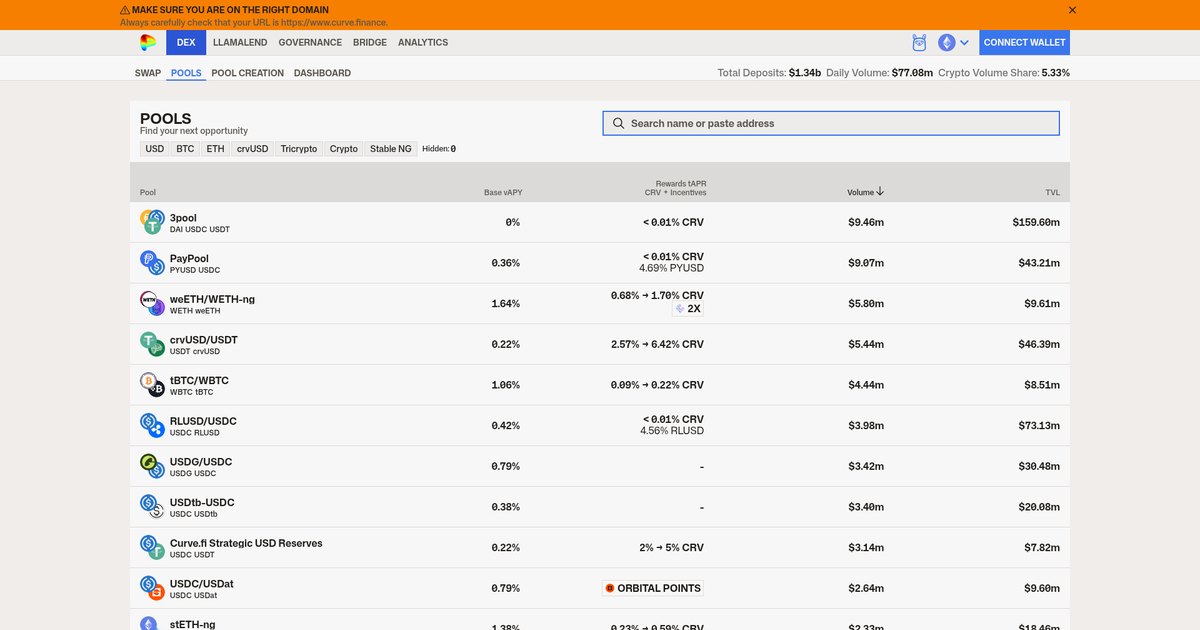
Illustrations were replaced with screenshots of the live Curve app — the pools list, the swap screen, the gauge dashboard, DAO proposals, veCRV locking and crvUSD savings — and each one now carries descriptive alt text and social preview images.
New step-by-step guide: how to use Curve Finance
A full walkthrough was added: connecting a wallet, swapping stablecoins, adding liquidity, staking LP tokens in a gauge, claiming CRV and locking veCRV, plus the mistakes that cost beginners the most.
Related reading
Guides
What is Curve Finance?
A clear introduction to Curve Finance: the stableswap AMM, who uses it, what problem it solves and how it differs from Uniswap.
Read more →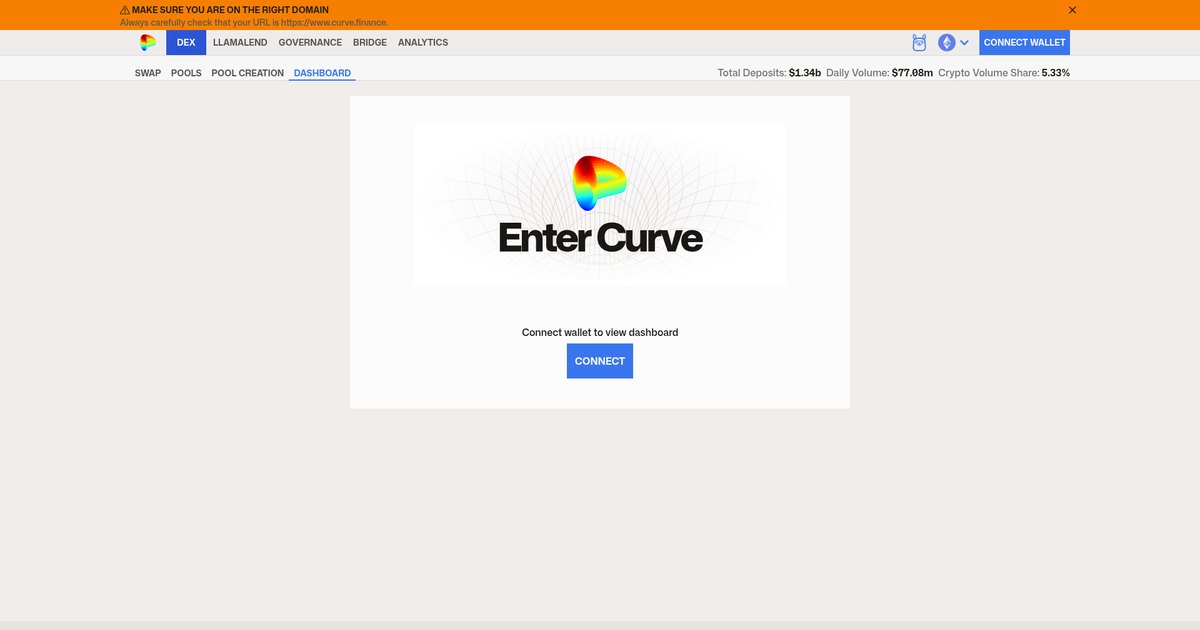
Guides
crvUSD and borrowing on Curve
How crvUSD works: overcollateralised minting, the LLAMMA soft-liquidation engine, borrow rates, the peg keeper and Curve lending markets.
Read more →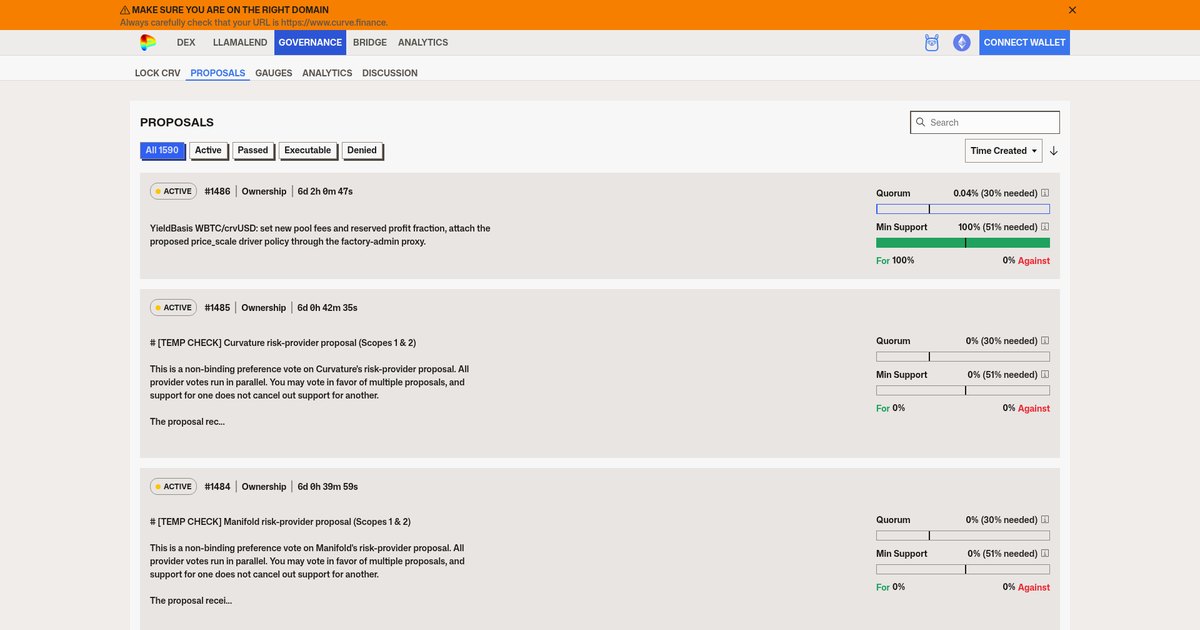
Guides
CRV tokenomics and veCRV
CRV supply and emissions, how vote-escrowed veCRV works, boost calculation, gauge weight voting and the vote incentive market.
Read more →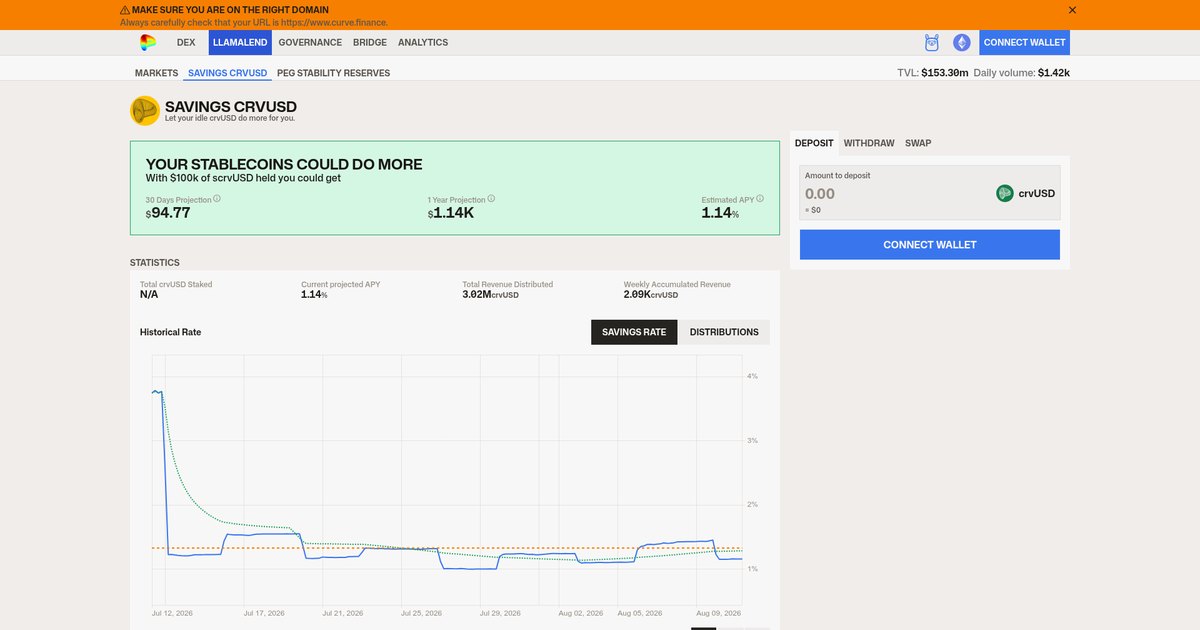
Guides
How to use Curve Finance step by step
Step-by-step guide on how to use Curve Finance: connect a wallet, swap stablecoins, add liquidity, stake LP tokens in a gauge, claim CRV and lock veCRV safely.
Read more →Articles
How the Curve AMM actually works
A step-by-step explanation of the Curve stableswap invariant, the amplification parameter A, price impact and how cryptoswap extends it to volatile assets.
Read more →Articles
How to evaluate a stablecoin liquidity pool
A practical checklist for judging a Curve stablecoin pool: asset quality, pool balance, amplification, volume-to-TVL ratio and reward sustainability.
Read more →